When government sees art as ‘terrifying,’ that’s scary
No amount of tarps can cover up the problem — or stop Americans from thinking for themselves
In the past, when I told people who expressed the slightest interest that my commentary focused on the intersection of politics, culture and race, many seemed puzzled by that particular mix. Not anymore. It’s pretty obvious how all those topics are related.
We’re reminded of it every day.
Mention the John F. Kennedy Center for the Performing Arts, and it’s not a symphony performance or the latest tour of “Hamilton” that comes to mind. Instead, pesky questions about possible demolition of the edifice and whether Donald J. Trump’s name will adorn its façade enter the chat.
A president with stated disdain for the goings-on inside the building is now trying to control what’s on the outside. So much for the “performing arts” or the reality that the center serves as a “living memorial” to the 35th president of the United States.
In a legal filing that reads like a vengeful and petulant child was guiding the lawyer’s hand, the Department of Justice has warned that the building may be demolished if the administration isn’t allowed to “rebuild and renovate.”
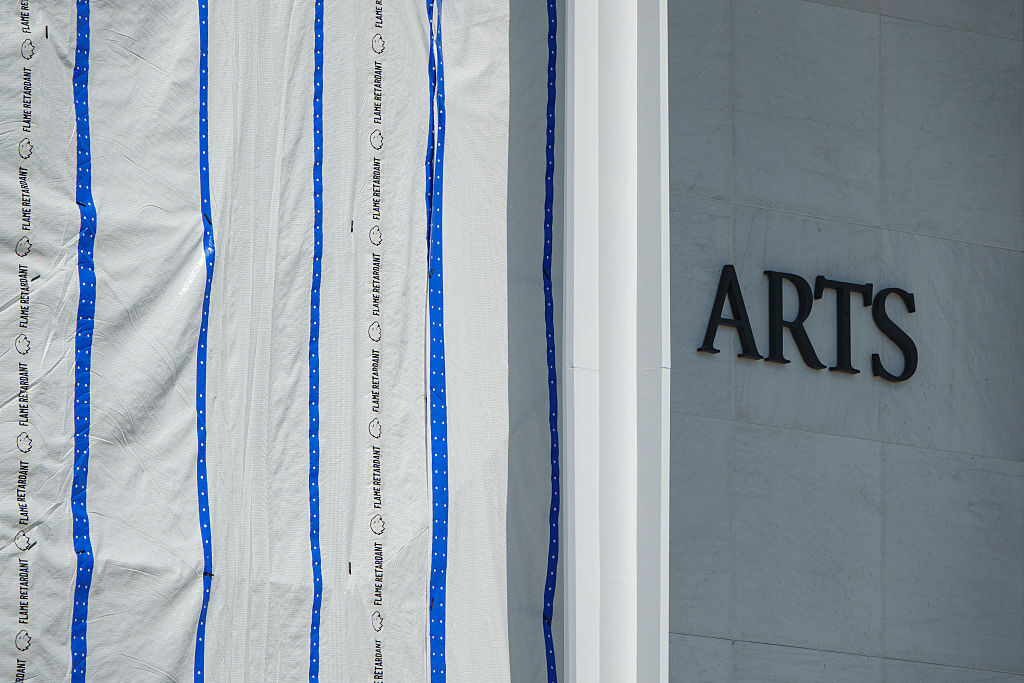
Why do I think it’s not about the art or the condition of a building, but control? A tarp still covers the site of a previous effort to add the president’s name — there to protect the building or the president’s ego, take your pick.
Now, the Kennedy Center board filled largely with Trump appointees has approved a new inscription, “Renovated and Restored by President Donald J. Trump,” with the center plaza renamed for Trump, as well.
Rep. Joyce Beatty, D-Ohio, an ex-officio member of the center’s board, is again asking courts to step in. Remembering Trump’s East Wing moves and this week’s ballroom go-ahead by the Supreme Court, Beatty and anyone else might be looking over their shoulders for bulldozers.
The decorator-in-chief and his board should be worried about the audiences and artists who have fled the venue, leaving the finances if not the building, so far, in ruin.
It turns out the administration’s policing of the art the American people desire and deserve began the deterioration.
Meanwhile, a painting commissioned by the State Department in 2013 has been removed from the U.S. Embassy in Santo Domingo, Dominican Republic. Erin Scavino, director of Art in Embassies for the administration, called Kehinde Wiley’s “Young Artists After Siamesas 1960” “very woke” and “aesthetically terrifying.”
The work features four Dominican models against Wiley’s signature floral background. In a signature Trump administration move, the painting was covered with a tarp with an American flag motif before its removal.
Wiley’s style is not everyone’s taste — and that’s fine. Art is open to many interpretations. Critics make a living and start feuds over artists and their work.
But “woke” and “aesthetically terrifying” are over the top, even in an administration prone to hyperbole. The term “woke,” missing the original context of being a warning to Black Americans to be cautious of pervasive and sometimes deadly racism, has turned into a catch-all complaint about anything and anyone Black. In this case, that would be the artist and his subjects — the models in the painting and, most famously, Barack Obama, a former president who lives rent-free in Trump’s brain.
The artist who painted the first lady’s portrait received similar disdain from an administration that believes critic equals censor.
Amy Sherald’s Michelle Obama portrait sparked praise and debate. (“Does it really look like her?” some asked.) It also raised the artist’s profile and interest in her solo show, “American Sublime.”
But those hoping to visit the planned exhibit at the Smithsonian’s National Portrait Gallery and decide for themselves never got the chance. The artist withdrew the show from that particular venue over questions about her work, particularly one piece, “Trans Forming Liberty,” which features a transgender woman holding a torch in a pose similar to the Statue of Liberty.
All sorts of solutions were bandied about: Would it be left out, or perhaps replaced or accompanied by a video of the public’s reaction to the work?
It would not be the first or last time the Trump administration attacked the Smithsonian and its exhibits for not reflecting the president’s singular view of American taste and history.
The artist, in a statement to The New York Times, made her stance clear: “I cannot in good conscience comply with a culture of censorship, especially when it targets vulnerable communities.”
On a recent trip to Atlanta, I toured “American Sublime” at its final stop, the High Museum of Art, to see what all the fuss was about. It was a pleasure and a relief to sit quietly with the work — the famous Obama portrait, of course, the striking “Trans Forming Liberty” and some of the other pieces that subverted stereotypes.
My favorite might have been the moving portrait of Breonna Taylor. Or maybe it was “A God Blessed Land (Empire of Dirt),” with the overalls-wearing Maryland farmer Denzel Mitchell, perched on his tractor, meeting every viewer’s gaze.
I’m still thinking about the show — and that’s the point.
When any government makes the decision about what art is good or bad, what deserves to be seen or censored, it insults its citizens. It treats them like children. Come to think of it, I was exposed to art I didn’t fully understand when I was a child. All it did was make me curious.
Art is supposed to make you think.
Our current Big Brother of an administration steps in to do the thinking for you.
And that is far more “terrifying” than any “woke” painting.
Mary C. Curtis has worked at The New York Times, The Baltimore Sun, The Charlotte Observer, as national correspondent for Politics Daily, and is a senior facilitator with The OpEd Project. She is host of the CQ Roll Call “Equal Time with Mary C. Curtis” podcast. Follow her on X @mcurtisnc3.