Lawmakers bristle at Trump effort for tighter control of NIH
White House bid is latest by Trump administration to exert more control over agency
Key lawmakers are pushing back after reports revealed that the Trump administration is seeking even greater control over the National Institutes of Health grantmaking process.
The effort, first reported by The Washington Post, includes potentially issuing an executive order or White House review of grants to weed out research contrary to President Donald Trump’s agenda.
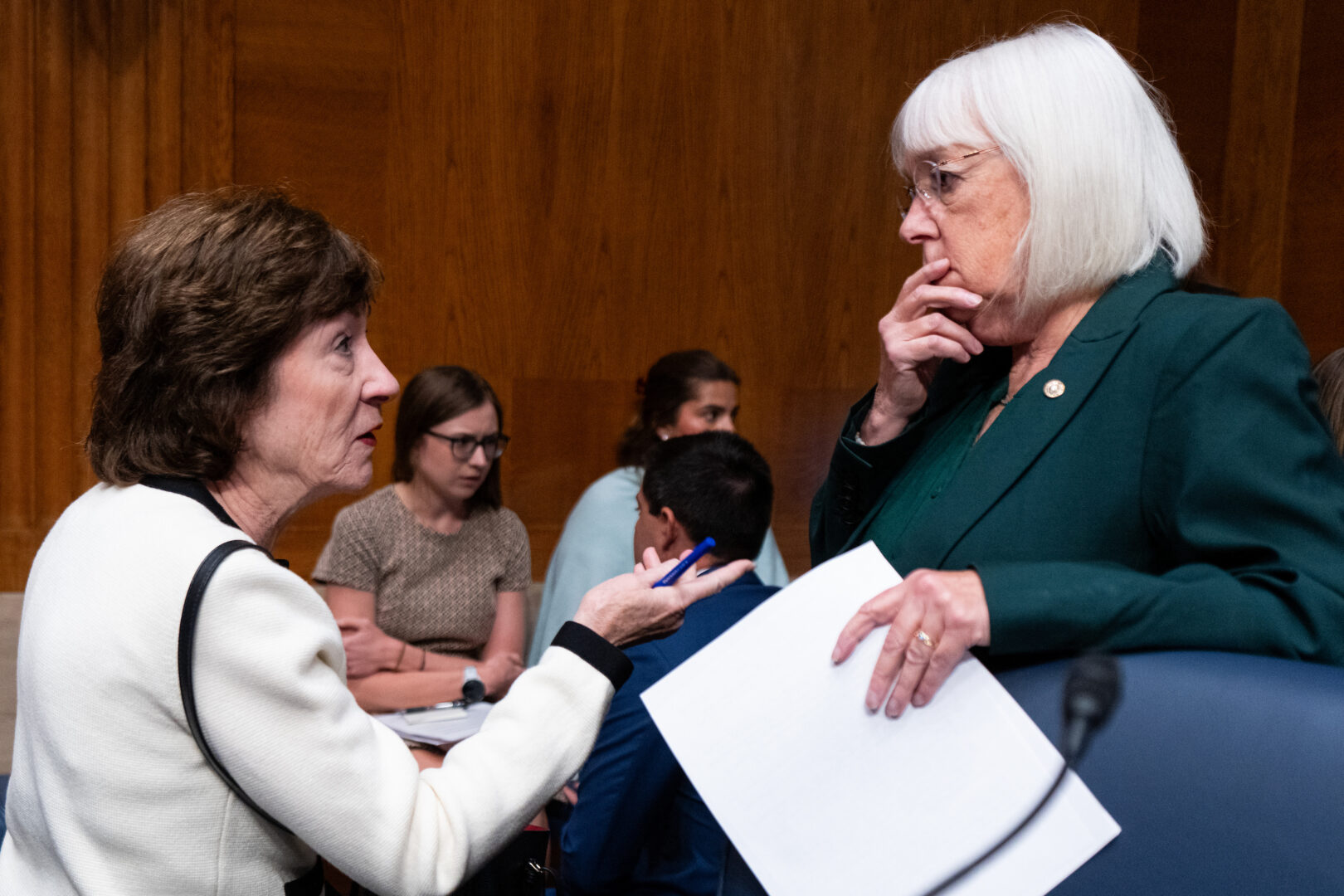
Sen. Susan Collins of Maine, chair of the Senate Appropriations Committee, on Monday criticized the plan, saying that the Office of Management and Budget shouldn’t be involved in these decisions.
“Any attempt to politicize grantmaking at the National Institutes of Health (NIH), or any other agency, by another means — whether an Executive Order or guidance — is contrary to congressional intent,” Collins said in a statement Monday. “Imposing a political review on awards that have already been selected through a rigorous scientific and merit-based process undermines the long-standing principle that the government funds awards based on scientific need and merit, rather than political ideology.”
The White House effort is the latest by the Trump administration to exert greater control over the agency and how it doles out money, much to the objection of members of Congress, including some Republicans.
Collins authored a letter to OMB this summer asking it to walk back a proposed rule that she is worried would “politicize” grantmaking.
The proposal, known as the Uniform Guidance proposed rule, would require political appointees to review discretionary grants to make sure they aligned with presidential priorities and would expand agencies’ ability to terminate grants “for convenience,” among other changes.
The continuing resolution funding the government through mid-December contains a provision delaying implementation of the controversial rule.
Related: Critics mount offensive against change to federal grant rules
The White House did not immediately respond to a request for comment.
Sen. Patty Murray, D-Wash., the Appropriations panel’s ranking member, on Monday similarly criticized the effort for a new executive order or review that could further politicize the process.
“Only one question should decide which research gets funded: is this good science that could save lives?” she said in a statement. “Trump wants to answer a different question: does this help me settle a score?”
The reports have further alarmed organizations in the research industry.
Erika Sward, executive director of biomedical research advocate United for Cures, warned that the politicization of grantmaking could halt ongoing clinical trials.
“Medical research for patients isn’t a partisan issue — it never should be,” she said. “We call on Congress, Democrats and Republicans alike, to reject this proposal outright.”
Other efforts by the Trump administration include one last year that terminated or froze more than 1,800 research grants, particularly targeting grants related to diversity, equity and inclusion. While officials have noted grant money eventually flowed to recipients, just how much has been reinstated has been disputed.
The administration also proposed slashing the agency’s budget, then tried to cap researchers’ overhead costs by installing a forward-funding process, which would require that all the money for a multiyear grant is supplied in the first year. That idea was rejected by lawmakers.