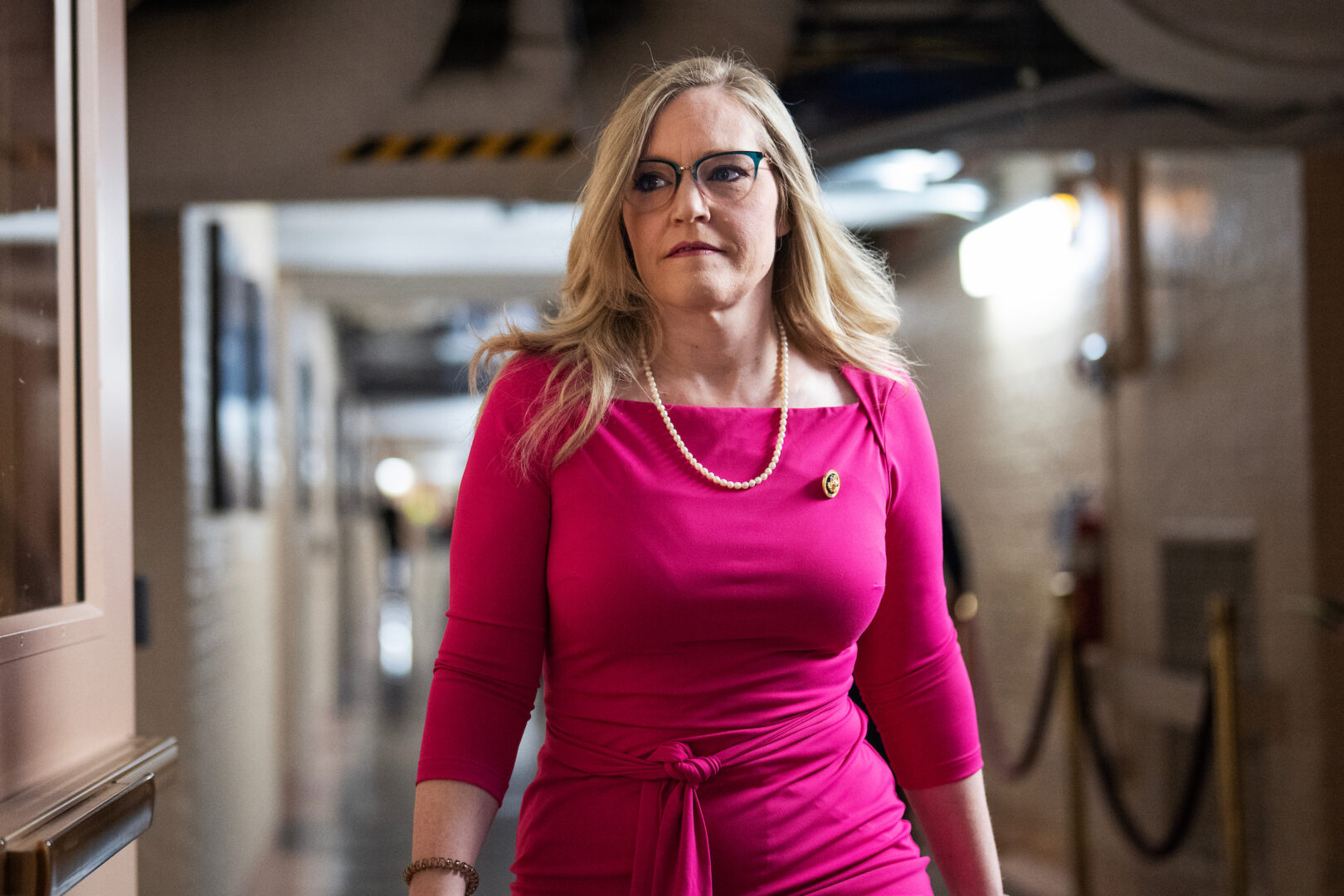
By the time Brittany Pettersen’s son was 6 months old, he’d taken 24 flights. The Colorado Democrat’s son is no world traveler — his time on planes as an infant was spent with Pettersen flying back and forth to Washington for votes. As the House considers potential rules changes for next Congress, Pettersen and other members spoke Wednesday at a Rules Committee hearing in support of proxy voting for new parents. Under her proposal, members would be allowed to tap a colleague to cast floor votes on their behalf for up to 12 weeks after they or their spouse have given birth. “This place does not work for young families. That is a detriment,” Pettersen said. It wasn’t the first time she’s spoken in support of proxy voting. When the Rules Committee held its member day hearing in 2024, she made a similar pitch while announcing she was 20 weeks pregnant, later becoming the 13th voting member to give birth in office. Pettersen, alongside Florida Republican Rep. Anna Paulina Luna, went on to lead an effort to change House rules last year, gathering enough signatures on a discharge petition to force the issue with leadership. But their proxy hopes fell short after Luna struck a deal with Speaker Mike Johnson to instead rely on vote pairing, a practice that allows absent lawmakers to seek out pairings with colleagues of an opposing stance, essentially canceling out their votes. “When we were still fighting to get these changes done, I thought that I might be able to have my constituents represented during that time. Ultimately, that did not come to fruition,” Pettersen said Wednesday. Four weeks after giving birth, Pettersen flew from Colorado to D.C. with her son as the House considered a budget resolution, describing having to choose between an “incredibly important bill for my constituents” and recovering at home with her newborn. While Democrats created a House-wide proxy voting system in 2020 in response to the pandemic, Republicans did away with it when they regained power in 2023. Opponents cite constitutional questions or how members on both sides of the aisle abused it, attending fundraisers or going on vacation instead of showing up for work. But Democrats feel good about their chances of winning back the House in the midterm elections, meaning they would control its rules. And Pettersen argues a narrow carveout for new parents could help make Congress look more like the country it serves. In the 119th Congress, 7 percent of members are mothers to young children, compared to 18 percent nationally, according to an analysis by the Vote Mama Foundation, a nonprofit that aims to break barriers moms face when running for office. “I’ve heard many say, ‘Well, then maybe you should choose a different profession.’ That would be an incredible disservice to the American people,” said Rep. Hillary Scholten, D-Mich., gesturing around the hearing room. “There’s several moms sitting around this table right here who know what it’s like when you’re making choices at the grocery store about what you can and cannot afford.” For some, the challenge of parenting in Congress has informed the decision of when to have children at all. Rep. Sara Jacobs, D-Calif., froze her eggs in August 2021 as she weighed the demands of starting a family versus pursuing a career in public service. Proxy voting could help, she said. “For me, it’s literally going to decide if or when I can start my own family, and I know that’s true for many others,” Jacobs said at the hearing. Members lined up Wednesday to float other big ideas to change how the House works, like rearranging the congressional schedule for a better split of time between D.C. and the district, requiring committee meeting times to be posted on a shared schedule to reduce overlap, and allowing a bill to have both a Republican and a Democrat listed as lead sponsors. Some proposed changes, like barring members of Congress from trading stocks or prohibiting relationships between members and all House employees as part of a larger sexual misconduct overhaul, have already been hot topics this Congress. House Rules ranking member Jim McGovern, D-Mass., said in an interview that he supports proxy voting for new parents and that if Democrats are in the majority for the 120th Congress, he would add it to the rules package. “It’s something that I would want,” he said. Proponents of proxy voting recognize its potential for abuse. It’s why Pettersen, Scholten and Jacobs say it should only be used in specific cases — like new parenthood. “You can’t fake being pregnant or giving birth,” Pettersen said.