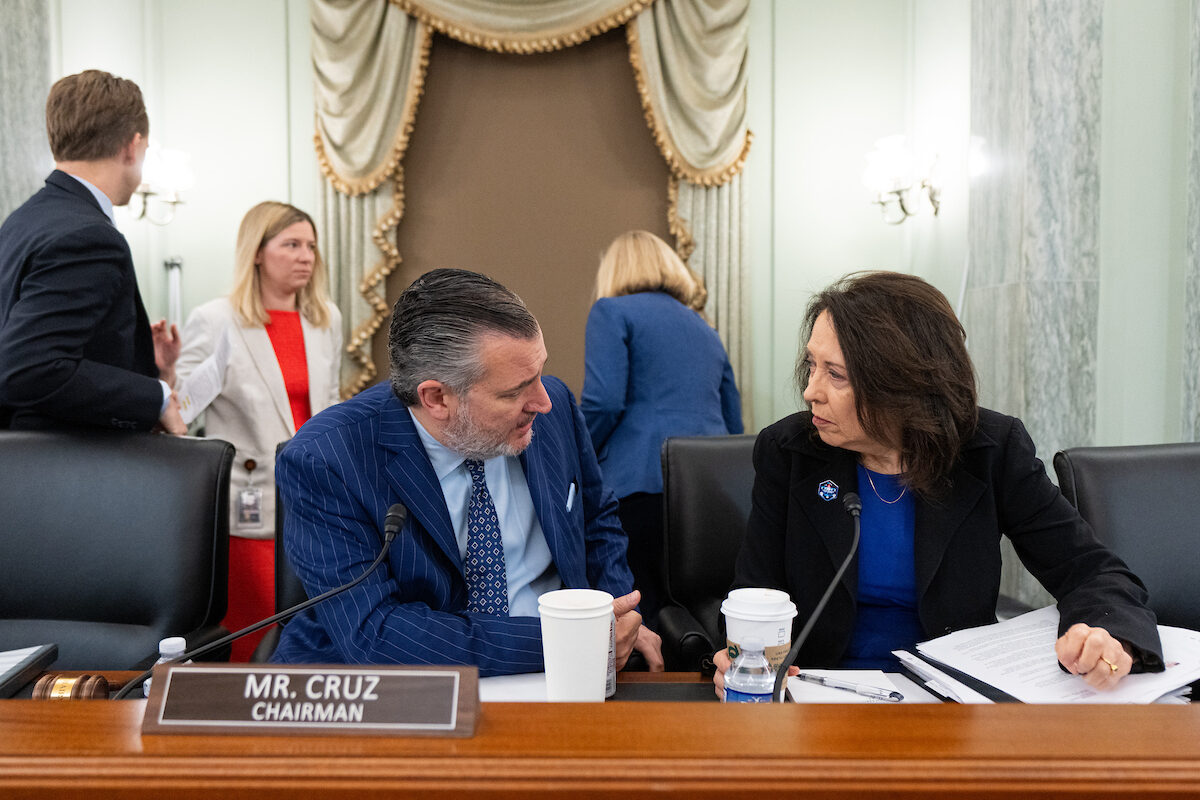
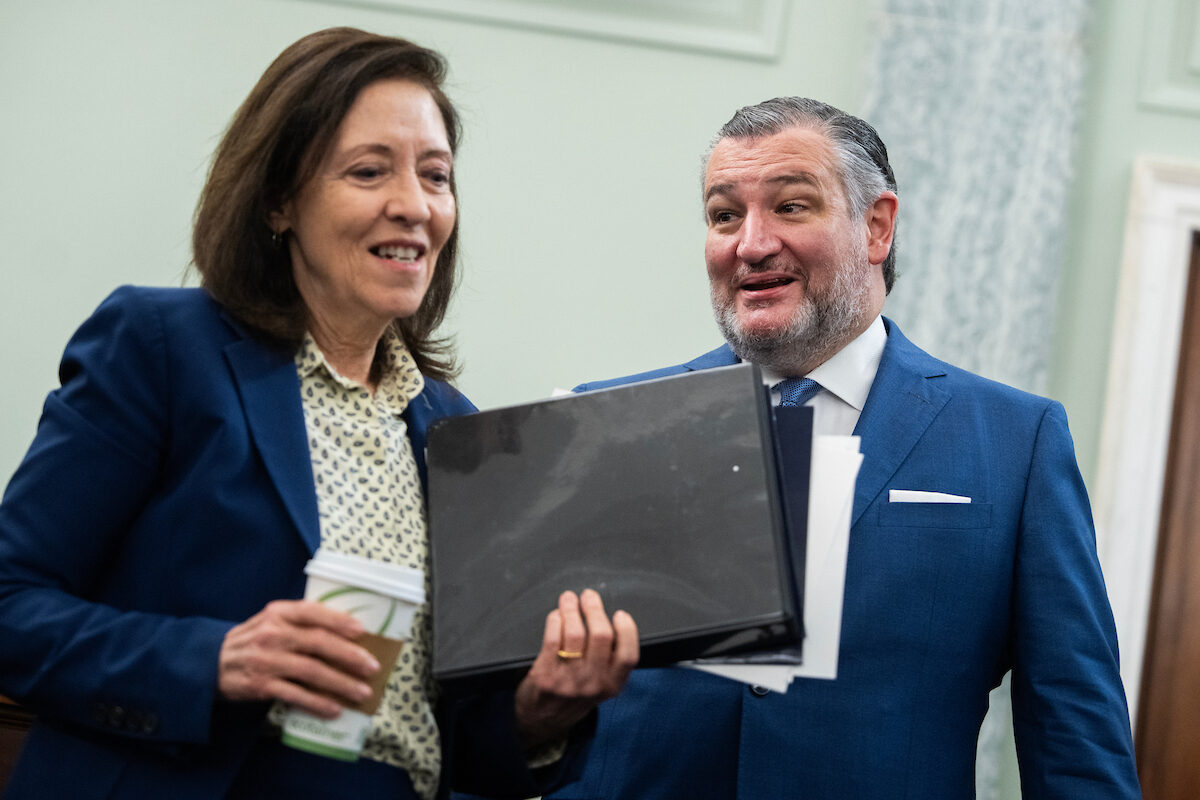
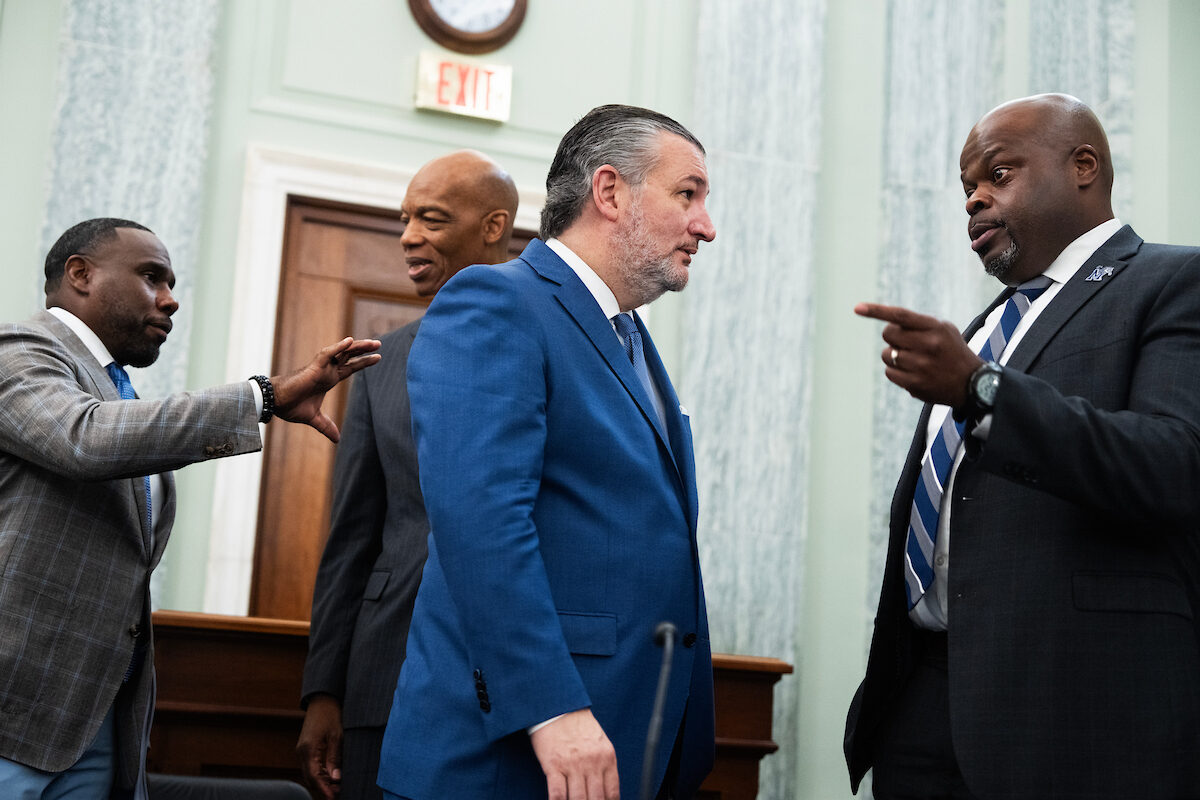
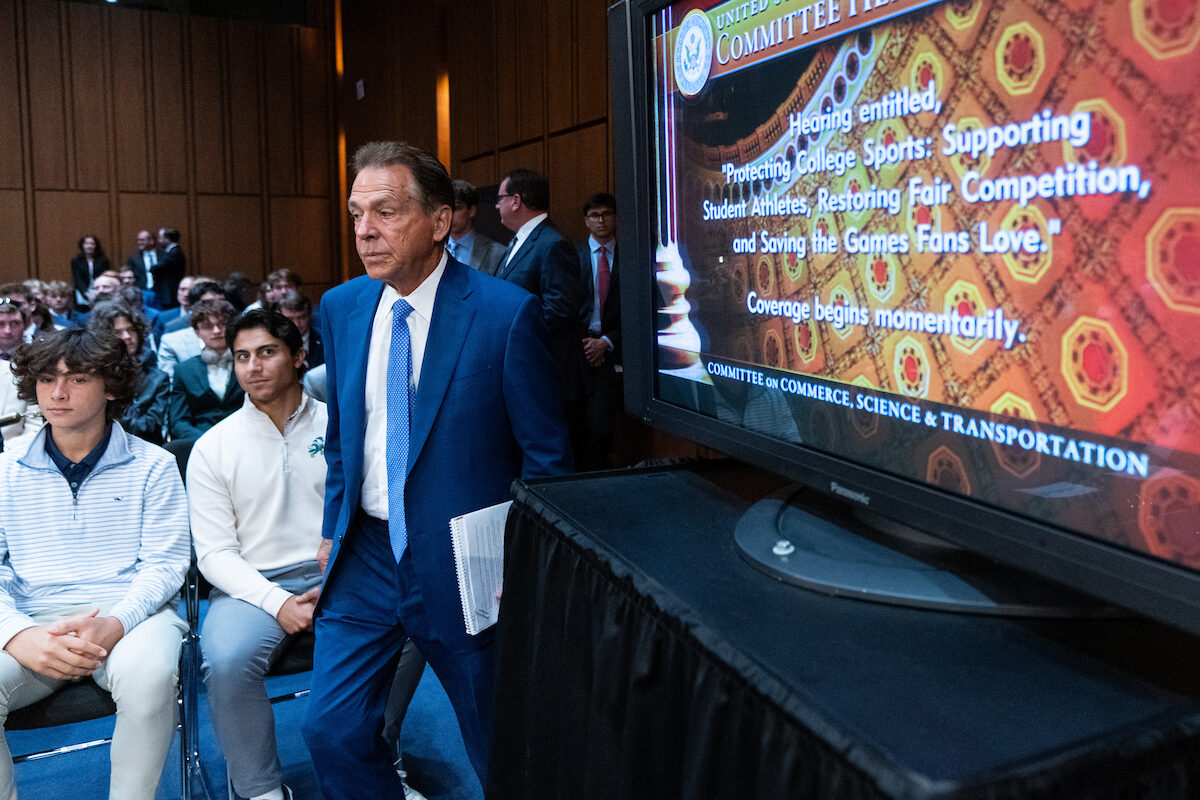
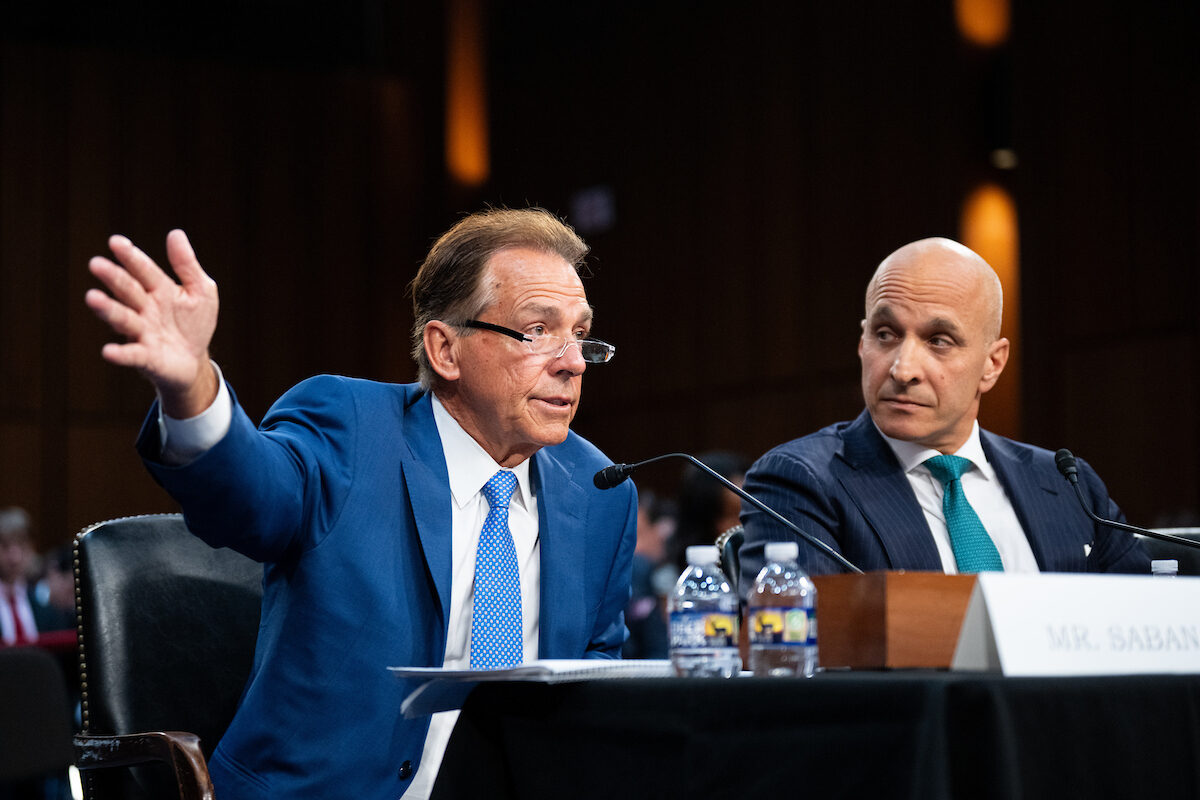
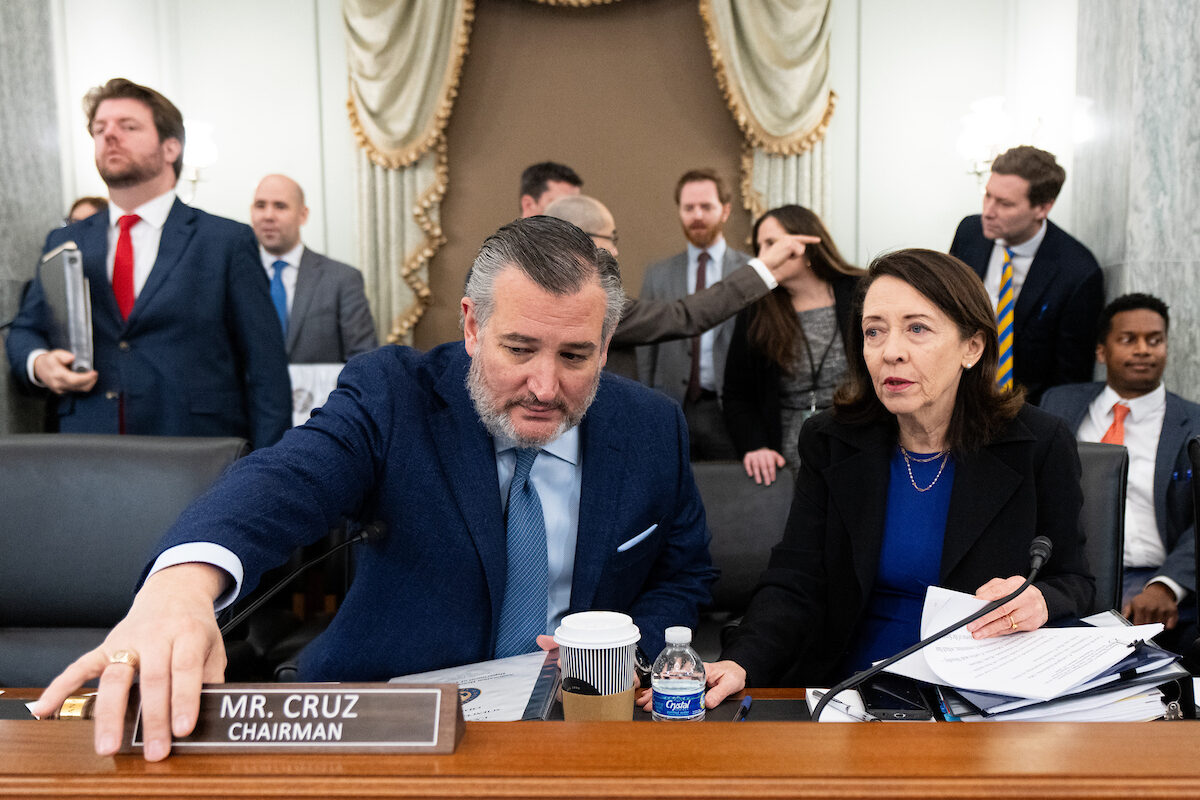
The authors of a Senate college sports bill say it’s time to bring House Republicans and Democrats into discussions, as the clock is ticking to get the measure to President Donald Trump’s desk before the long August recess. Senate Commerce Committee ranking member Maria Cantwell, D-Wash., said the push to advance the bill through the panel included “three corners,” referring to senators, White House officials and college athletics stakeholders. “And I think it's probably time to have a ‘five-corner’ discussion, because the issues we're seeing are from … both sides of the House,” Cantwell told reporters after a June 18 markup of the legislation. “I think that that's probably what would make the most sense to get everybody's viewpoint properly represented.” But another week — dominated by chaos in both chambers — on a truncated election year floor calendar has already passed since the Senate Commerce Committee advanced the bill. Committee Chair Ted Cruz, R-Texas, has been open to expanded talks with House members and has said he already has had some exchanges about the legislation that he crafted along with Cantwell and Sens. Eric Schmitt, R-Mo., and Chris Coons, D-Del. Cruz’s message: A House version of the bill has stalled, and the Senate bill is the only game in town — meaning the lone bipartisan measure with a chance of passing both chambers and being signed into law. “I understand House leadership's concerns. They have a lot invested in the SCORE Act. They worked hard in good faith on the SCORE Act,” Cruz told reporters after the markup, using the acronym for the House bill, the Student Compensation and Opportunity through Rights and Endorsements Act. House GOP leaders revised that bill in April but ultimately had to pull it from consideration after the Congressional Black Caucus and the NAACP tied the legislation to redistricting efforts in red states that took away some majority-Black House districts. “I agree with that bill. The challenge is there are precisely zero Senate Democrats who would vote for the SCORE Act,” Cruz said. “And so, it is a bill that has no prospect of actually being signed into law. The only bill that has a realistic path to becoming law is this [Senate] bill.” The reason, Cruz said, is bipartisan compromise. “I had to make concessions that, frankly, I didn't like. Sen. Cantwell made concessions that she didn't like. And that's how you get a compromise where not everybody gets everything they want,” he said. “But I think the final product is a good product, and so the next step is going to be to bring this bill to the floor and take a vote on the floor.” Cruz said last week he hoped Senate Majority Leader John Thune, R-S.D., would agree to bring the bill to the floor in July. The chairman’s goal is for Trump to sign the measure into law before the autumn academic semester and sports season begins. Committee aides on Thursday gave no indication that Cruz had moved that legislative goalpost. One lobbyist who has advocated for some smaller collegiate conferences during the Commerce panel’s work on the bill said his firm’s understanding was that July remained the target. Spokespersons for Thune and Senate Majority Whip John Barrasso, R-Wyo., had not responded to an inquiry seeking comment on whether the bill would get July floor time. Notably, the tall and athletic-framed Thune played college basketball at California’s Biola University. 'Who's the puppet'? Both Cruz and Cantwell acknowledged that additional changes could be required to secure the necessary votes in both chambers. However, both said major revisions were unlikely. Cantwell said her exchanges about the measure revealed colleagues with their proverbial political fingers in the air, trying to determine how to vote as November’s midterm elections get nearer — as well as politics playing out in university leadership. “A lot of people like it. They're just trying to understand the politics,” Cantwell said. “I think what's going to come up is that [athletic directors] and presidents are going to get their comeuppance from regents who were all of a sudden like, ‘What the hell are you doing?'” She described a conference call she and Cruz had with Southeastern Conference (SEC) presidents. “The presidents had to have a meeting to decide whether they could get on a conference call with Sen. Cruz and I without the conference commissioners,” she said. “One university president could talk. He read a statement, and then nobody else could talk, and they didn't have any questions. So, who's the puppet here? So, I think the jig is going to be up on schools in a broader discussion, like, ‘Hey, are you really letting the conference drive this discussion now?’” The SEC, which does not support the Senate legislation, did not respond to an email seeking a comment on Cantwell’s “puppet” remark. Schmitt said during the markup that he would continue talks with SEC officials to try assuaging their concerns before the measure hits the Senate floor. Cruz and Cantwell said last week they believe the bill could pass both chambers without the so-called Power Two conferences signing on — and Cruz said he expects big vote margins beyond the Senate’s 60-vote threshold. “My objective from the beginning was not simply to squeak by with just 60 votes, but to have a bigger bipartisan vote than that,” Cruz said. “I think this committee vote argues well for a strong vote on the floor. And I believe when we pass this with a big, bipartisan vote, it will go to the House with momentum — and I believe the House will take it up and pass it.”