At the Races: Family in the fray

Welcome to At the Races! Each week we bring you news and analysis from the Roll Call campaign team. Know someone who’d like to get this newsletter? They can subscribe here.
By Daniela Altimari, Niels Lesniewski and Mary Ellen McIntire
An ad produced by Vivek Ramaswamy, the Republican nominee for Ohio governor, features the mother of Amy Acton, his Democratic opponent, calling her daughter a liar and urging voters to reject her.
The ad doesn’t mention that Acton has long been estranged from her mother over allegations that her stepfather sexually abused her, which led to him being charged with rape when Acton was 12, according to court documents obtained by the National Review. He was indicted by a grand jury but fled town and was never tried. Throughout her career in public life, Acton has spoken about the abuse.
The spot drew widespread condemnation from people across the political spectrum, including from Ohio’s Republican governor, Mike DeWine, who has endorsed Ramaswamy. “It’s wrong to run this ad,” DeWine told reporters Thursday.
But the ad drew high-profile defenders from the White House. Vice President JD Vance said he was “disgusted” by Republicans who criticized the spot. President Donald Trump praised Ramaswamy and urged him not to take the ad down. “The Press is trying to convince everyone that this Ad is bad, because it’s so good! Who wouldn’t use such an Ad? I would, it’s called, ‘hitting pay dirt,’” Trump wrote on social media Thursday.
It wasn’t the only attack ad using a candidate’s family to hit the airwaves this week. In Maine’s high-profile Senate race, a top Senate Republican super PAC launched a radio spot labeling Democrat Troy Jackson as a “freak” who has “two kids with his cousin” over a jaunty country jingle.
Jackson’s Republican opponent, Sen. Susan Collins, is among those calling for the ad to be removed.
The midterm election cycle has seen a spike in ads aimed at politicians’ families. In Iowa, a Democratic super PAC produced an ad accusing Rep. Ashley Hinson, the Republican nominee for Senate, and her husband of blurring ethical lines. Republicans lobbed a similar line of attack against the husband of Democratic Rep. Chris Pappas, who is running for Senate in New Hampshire.
But critics say the Acton ad represents a new low, and one notable Ohio Republican predicts the spot will backfire on Ramaswamy.
“[The] floor may have just fallen out from under the Republican campaign for Ohio Governor,’’ former Rep. James B. Renacci, the 2018 GOP nominee for Senate, posted on X. “And any Republican who fails to distance themselves from this ad risks taking on water as well.”
Starting gate
Tar Heel State tightrope: In the race for North Carolina’s open Senate seat, Republican Michael Whatley has consistently trailed in the polls behind Democrat Roy Cooper, the state’s battle-tested former governor. Now, with time running out and national party funding drying up, Whatley faces a high-stakes balancing act: winning over unaffiliated voters who have soured on Trump without alienating a Republican base that remains fiercely loyal to the president.
#NC01: North Carolina Republicans are counting on the new congressional map to help retired Army Col. Laurie Buckhout defy the current political headwinds in her rematch against Democratic Rep. Don Davis. But Trump’s sinking poll numbers have scrambled the calculus and turned what was meant to be a likely Republican flip into a Toss-up race.
Spotlight on Virginia: Republicans are defending a trio of seats in Virginia that highlight the range of districts that have made it onto the House battleground this year. Rep. Jen Kiggans is used to tough races in her swingy district, while neighboring Rep. Rob Wittman faces a competitive reelection for the first time. Democrats are also targeting Rep. John McGuire’s seat, which Trump carried by 12 points two years ago.
Q3 roundup: Democrats have expanded the Senate and House battlegrounds in this year’s midterm elections, and new federal fundraising filings show their candidates largely outraised their Republican opponents in the third quarter. On the Senate side, that included Democrats in deep-red states such as Kansas and South Carolina. House Democratic candidates in targeted districts also reported raising big sums as they try to keep pace with the massive spending by GOP outside groups. But Republican incumbents in most of these races entered October with more cash on hand.
#SCSEN: Trump traveled to South Carolina this week to boost appointed Sen. Darline Graham, who, our colleague Savannah Behrmann writes, is locked in an unexpectedly tight race against Democrat Annie Andrews.
E15 boon: Trump said at a rally in Kansas this week that he would only make permanent the year-round use of a fuel blend containing a higher percentage of ethanol if Republicans hold the state’s Senate seat, as Niels reported with colleague David Jordan. “With Roger Marshall in the Senate, we will make year-round E15 permanent. But if Adam Hamilton is in, I’m not doing it,” the president said.
Fight for the heartland: The high cost of diesel is underscoring tight Senate races in Iowa and Kansas, two red states where some farmers are considering voting for Democrats this year, Savannah, David and our colleague Ryan Kelly report.
Data center attacks: Democrats running for Senate are pressing their opponents in debates and ads about artificial intelligence data center policy, often as a proxy for voter fears about the economy and local impacts, our colleague Allison Mollenkamp writes.
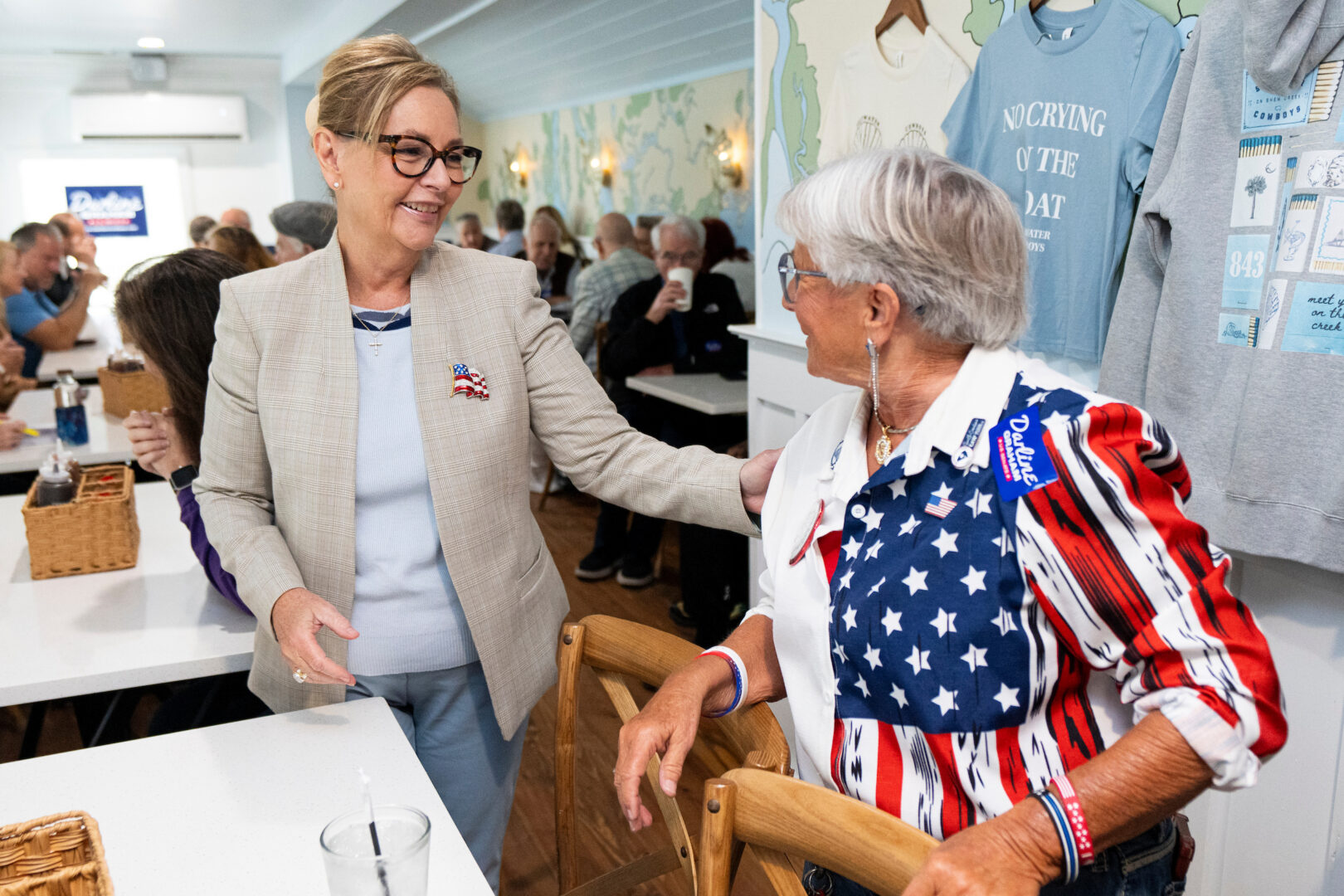
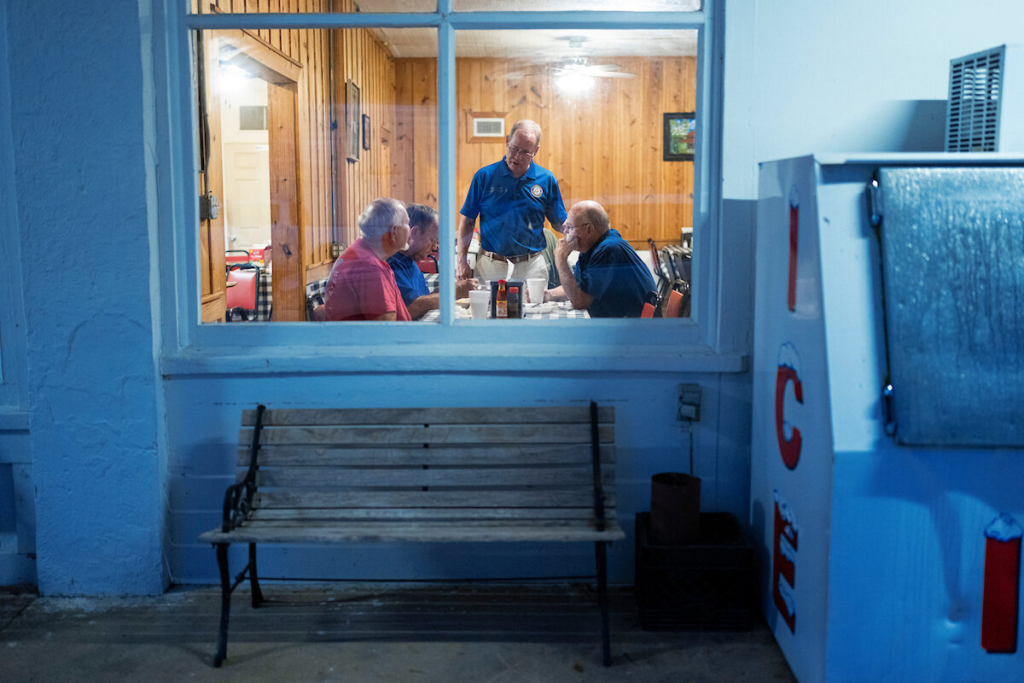
Carolina in our minds: Campaigns in both North and South Carolina are ramping up and Roll Call photojournalist Bill Clark was on the trail with Daniela, following candidates in Eastern North Carolina and in the Charleston, S.C., area. He also spoke about the experience in a video for Roll Call’s Capitol Lens.
Growing coalition: The New Democrat Coalition, already the largest ideological bloc within the House Democratic Caucus with more than 100 members, is poised to grow bigger and more influential next year, Arizona Rep. Greg Stanton, who chairs the group’s campaign arm, said in an interview with Roll Call’s Nina Heller.
ICYMI
Virginia Democrat arrested: L. Louise Lucas, the president pro tempore of the Virginia Senate who led Democrats’ court-blocked redistricting push in the commonwealth this year, was charged Thursday with leading a “criminal marijuana distribution enterprise.” Lucas, who surrendered to authorities, according to the Justice Department, struck a defiant note in a statement, saying, ”I will not be intimidated. I will not be bullied. And I will not back down.”
Oliver out: Shawn Oliver, the Republican nominee for lieutenant governor in Massachusetts, suspended his campaign after he was arrested on drunken driving charges following a car crash. The Republican ticket, led by businessman Mike Minogue, faces an uphill climb in the Bay State, where Democratic Gov. Maura Healey is heavily favored to win a second term.
Democrats spending where? Senate Majority PAC launched a $1.2 million ad campaign in Mississippi to boost prosecutor Scott Colom’s challenge to Republican Sen. Cindy Hyde-Smith, a notable entrance in a state that Trump won by 24 points in 2024.
Fabricated polls: An upstart group calling itself Wedgewood Polling has admitted that almost all of its work product was faked, including polling that Michigan Democrat Mallory McMorrow suggested had contributed to the premature end to her Senate campaign. The firm copped up to the bogus polls following an investigation by FiftyPlusOne.
Amodei votes third party: Retiring Republican Rep. Mark Amodei told Politico that he didn’t vote for David Flippo, the GOP nominee to succeed him in Nevada’s 2nd District, opting instead for independent Lynn Chapman. The publication had previously reported on Amodei’s concerns with Flippo, who switched to the 2nd District from the 4th after it became open. With Democrats targeting the red-leaning district, Axios reported that the DCCC has posted messaging suggesting outside group ads should promote Chapman as an option for Republican female voters.
Ad watch: The Human Rights Campaign Equality Votes PAC announced a $1 million ad campaign to support California state Sen. Scott Wiener, who is running to succeed Nancy Pelosi. The former speaker is backing San Francisco Supervisor Connie Chan, a move Wiener allies say is driven primarily by a personal vendetta, The Washington Post reports.
Stepping back: The American Israel Public Affairs Committee said it would stop issuing endorsements and contributing directly to candidates, although its super PAC, the United Democracy Project, plans to continue. The decision comes as support from AIPAC became something of a liability in certain Democratic primary contests this year.
Bloomberg’s millions: Former New York Mayor Mike Bloomberg has sent Democrats about $80 million for the midterm elections, at least $50 million of which is going to support House candidates, The New York Times reports.
Maxxlooking: At rallies across the nation, Trump has devoted time to an unusual topic for a political event: men’s bodies. As The New York Times reports, the president has recently praised the appearance of House hopeful Ed Gallrein of Kentucky, called Georgia Rep. Mike Collins a “good-looking man” and marveled at Ohio Sen. Jon Husted’s physique.
Nathan’s notes
Inside Elections with Nathan L. Gonzales made 30 race rating changes last week, all in Democrats’ favor. “Republicans are running out of time to change the trajectory of the midterms,” writes Nathan.
Among the notable Senate updates were Kansas moving from Likely Republican to Tilt Republican and Florida entering the battleground, going from Solid Republican to Likely Republican.
On the House side, several races in deep-red territory are now rated competitive (Likely Republican), including Wyoming’s at-large district, Arkansas’ 2nd, Indiana’s 5th and Nebraska’s 1st.
What we’re reading
Leading from the middle: New York Mayor Zohran Mamdani was elected as a democratic socialist but is governing as a moderate, asserts this commentary piece from The Atlantic.
Looming battle: “Protect women’s sports” has become a campaign slogan for Republicans running against transgender rights. But as Politico reports, there’s a split emerging among conservatives as some push for a broad rethinking of Title IX, the federal law barring sex discrimination that’s driven the growth in women’s sports.
#MESEN: Roll Call alumna Bridget Bowman, now of NBC News, reported from Lewiston, Maine, a city that has been shifting to the right in recent elections, but where voters could be reconsidering their votes in a way that could affect Republican Sen. Susan Collins’ reelection bid.
Quietly trying to make history: New Hampshire Rep. Chris Pappas would be the first openly gay male senator if he wins his state’s open seat next month, but as The New York Times reports, that hasn’t been a focal point of his campaign.
The count: 64
That’s the number of House races that three of Trump’s political groups have directly spent on so far during the general election.
The three committees — MAGA Inc., No Going Back PAC and Safety & Affordability PAC — spent a combined $110.3 million through last week on the 64 races, according to a Roll Call analysis of new federal filings.
Most of the money — $59.8 million covering ads, mail pieces and text message campaigns — was earmarked for 41 Republican-held districts. According to the latest ratings by Inside Elections, Republicans are currently favored to retain 21 of them, while Trump carried 37 of the 41 two years ago, by an average of 8.7 points.
While the spending skews defensive overall, the top targets between the three groups are two Florida districts that were expressly redrawn to give Republicans the advantage. Nearly $8 million has been spent on Florida’s 25th District, held by Democrat Jared Moskowitz, and $6.7 million has been allocated to the 14th District, represented by Rep. Kathy Castor. Inside Elections rates both races as Toss-ups.
The three committees have so far spent a combined $50.7 million dollars on the 18 Toss-up races, according to Inside Elections: six seats currently held by Democrats ($4.3 million per seat) and 12 being defended by the GOP ($2.1 million per race).
– by Roll Call’s Ryan Kelly
Key race: #NY17
Candidates: Republican Rep. Mike Lawler faces a tough reelection fight against Democrat Cait Conley, an Army veteran who worked as a national security official in the Biden administration.
Why it matters: New York’s 17th District is one of a handful of Republican-held House seats that Kamala Harris carried in 2024, making it a top battleground. Lawler has been a top Democratic target since his first election in 2022, when he ousted DCCC Chair Sean Patrick Maloney.
Cash dash: Both Lawler and Conley have proved to be strong fundraisers. The Republican closed September with $2.9 million on hand, while Conley had $1.1 million banked for the campaign’s final stretch. Outside groups have spent more than $13 million on the race so far. The Congressional Leadership Fund, House Republicans’ top super PAC, spent $6.5 million attacking Conley through Oct. 20, while its Democratic counterpart, House Majority PAC, spent $1.1 million opposing Lawler. Elon Musk’s America PAC dropped $548,000 on Lawler’s behalf, while the Trump-aligned No Going Back PAC spent $275,000. The environmental groups EDF Action Votes and LCV Victory Fund collectively invested more than $1.3 million in support of Conley.
Backers: Lawler has touted endorsements from several labor groups and also picked up support from retiring Democratic Rep. Jared Golden of Maine. Conley counts on support from several veterans groups such as VoteVets and New Politics and Democratic outfits such as EMILY’s List, DMFI PAC and Majority Democrats.
What they’re saying: In a district that Trump narrowly lost, Lawler has sought to emphasize his willingness to work across the aisle and go toe-to-toe with the president. On air, he has highlighted his efforts last year to raise the SALT tax deduction cap in Republicans’ massive tax and spending law. In a recent ad, he pointed out that Conley doesn’t own a home in the district. Conley has emphasized her military service, which included serving six tours overseas. In an ad made in coordination with the DCCC, she tied the conflict in Iran to higher costs and criticized Lawler for voting against measures aimed at ending the war.
Terrain: The 17th District is a suburban stronghold in the Lower Hudson Valley and includes portions of Westchester County, just north of New York City, and all of Rockland and Putnam counties. Harris carried the seat by less than a point in 2024, while Lawler won a second term by about 6 points. Inside Elections rates the race a Toss-up.
Coming up
Candidates’ final fundraising reports before the election are due before Friday with the Federal Election Commission. The pre-general election filings cover the first 14 days of October.
Meanwhile, Trump’s barnstorming through red America continues, with an appearance Thursday evening in Iowa, followed by Florida on Friday and Georgia on Saturday. The president will be back on the road next week with scheduled trips to Mississippi on Monday, Texas on Tuesday and Ohio on Wednesday.
Photo finish
Subscribe now using this link so you don’t miss out on the best news and analysis from our team.