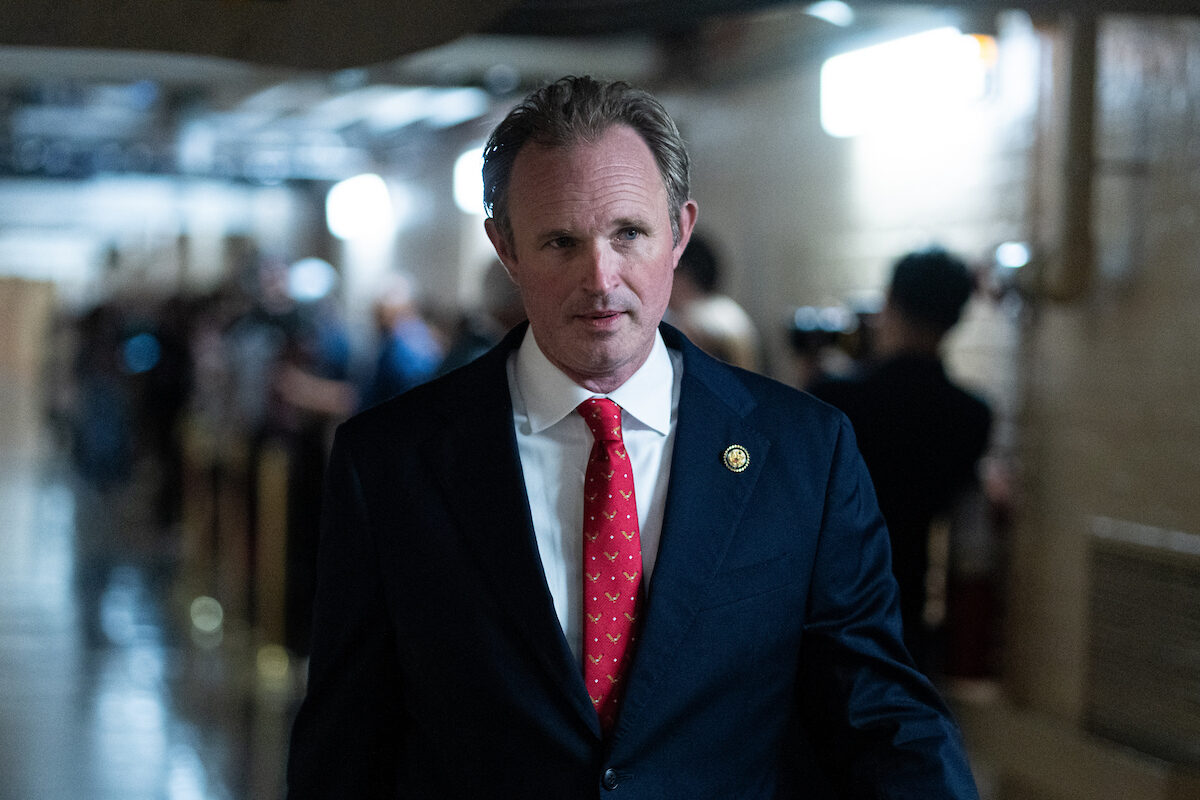
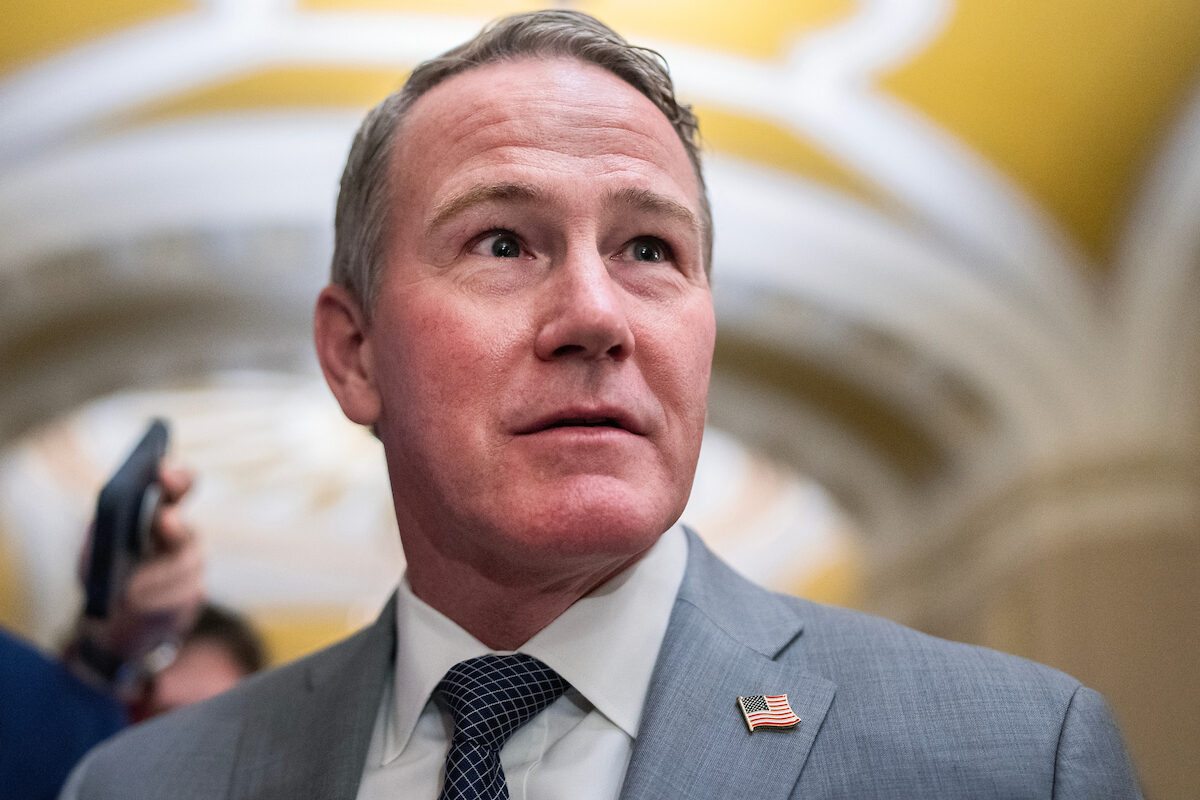
Another artificial intelligence regulation framework has joined the growing ranks on Capitol Hill, this time focused primarily on model safety and workforce impacts. Reps. Jay Obernolte, R-Calif., and Lori Trahan, D-Mass., unveiled their long-expected framework as a discussion draft bill on Thursday. Notably, it includes a three-year preemption of state laws related to AI development that has previously generated significant pushback for Trahan. Reps. Suhas Subramanyam, D-Va.; Scott Franklin, R-Fla.; Scott Peters, D-Calif.; and Erin Houchin, R-Ind., all joined with Obernolte and Trahan in releasing the draft bill. The 269-page text, dubbed The Great American Artificial Intelligence Act, comes just days after President Donald Trump signed an executive order to establish voluntary federal agency reviews of new frontier AI models. [Related: Executive order sets voluntary cyber reviews for advanced AI] In a statement on the bill’s release, Obernolte said it is a response to the rapid advance of a “critical technology.” “This discussion draft is an important step toward building a clear federal framework that promotes innovation, protects Americans from emerging risks, and ensures the United States continues to lead the world in AI,” he said. “We are releasing this draft to hear from stakeholders, experts, and the public so we can strengthen the legislation before it is formally introduced.” Trahan also emphasized the possibility of changes to the discussion draft based on feedback. “The threats AI poses to our national security, our safety, and our workforce are here and growing by the day. This bipartisan framework is designed to meet the challenges posed by this rapidly advancing technology without smothering American innovation. It protects workers, establishes real accountability for the most powerful frontier systems, and positions the United States to set the global standard on AI,” Trahan said. The bill would also extend the Cybersecurity Information Sharing Act of 2015 through fiscal 2035. That law allows companies to share cyber threat information without incurring antitrust liability. A long-term renewal has been held up, in part by political objections to the Homeland Security Department’s Cybersecurity and Infrastructure Security Agency. Preemption pushback The bill would preempt state laws and regulation “specifically regulating the development” of an AI model, with a three-year sunset. The bill specifies that preemption would not apply to laws related to the use or deployment of AI models. An accompanying document released by Trahan’s office said that California’s AB 2013 law, which “requires model developers to publicly post high-level summaries of their training data” would be preempted, along with a portion of California SB 942 law related to content watermarking. It also called out frontier safety laws in California, New York and Illinois, saying they would be “federalized” under the bill, though the bill does not make a distinction between “federalization” and “preemption.” “This will create important transparency, auditing, and whistleblower protection standards that belong and can be better implemented at the federal level. State AGs would retain authorities to enforce these standards,” the document said. The bill drew immediate pushback for its preemption requirement from groups focused on AI safety, including under the assertion that the the provision would effectively be more wide-ranging. Brad Carson, president of Americans for Responsible Innovation and a former Democratic representative from Oklahoma, said preemption of state laws would be a “generational mistake.” “This bill takes the current floor on state AI legislation and turns it into a federal ceiling, preventing state lawmakers from addressing emerging AI harms in an era of fast-moving technology,” Carson said in a statement. “Over the past two decades, state lawmakers have proven to be a backstop for tech accountability, fighting for families and communities even as Congress has stalled on creating guardrails.” Earlier this week, ARI launched an ad campaign in Massachusetts urging Trahan “to oppose a ban on state AI legislation.” Brendan Steinhauser, CEO of the safety-focused Alliance for Secure AI, praised the bill’s bipartisanship and its focus on catastrophic risk and loss of control, but opposed the preemption requirement. “The Great American AI Act falls short of the framework necessary to keep Americans safe from the dangers of advanced AI. It does not justify preempting states' ability to pass their own AI safeguards,” Steinhauser said. “A national AI standard should protect at least as much as it preempts, and states across the country have already enacted laws that do far more for Americans on issues like child safety and consumer protections than this proposal.” Mandates The bill would require large frontier developers — those with more than $500 million in gross revenue for the previous calendar year — to establish public frontier AI frameworks. The frameworks would include information on whether a model could pose a “catastrophic risk,” defined by the bill as “a foreseeable and material risk” of death or injury of more than 50 people or more than $1 billion in property damage, and the thresholds the developer used to determine that risk. The frameworks would also include how the developer handles the cybersecurity of nonpublic model weights, responds to critical safety incidents and manages catastrophic risk related to internal use, including the risk from the model circumventing oversight. Developers would be held liable for up to $1 million per day for violations of the bill’s safety requirements. Large frontier developers would be required to retain an Independent Verification Organization, licensed through the National Institute of Standards and Technology’s Center for AI Standards and Innovation. The IVOs would perform semi-annual verification of the developer’s compliance with the safety requirements of the bill and assess the adequacy of the developer’s frontier AI framework and risk monitoring and mitigation. The results of the audit would then be submitted to CAISI. Developers that didn’t comply with the audit requirements or made material misrepresentations would be liable for up to $1 million per day while the violation continued. Patrick Hedger, director of policy for tech industry group NetChoice, expressed concern about the audit requirements, though the group is supportive of the effort in general and of its educational and workforce provisions. “There are some changes we’d like to work with the sponsors on, including the bill’s aggressive auditing regime and data-sharing requirements for developers that could risk entrepreneurs’ trade secrets and private records,” Hedger said in a statement. The legislation would also formally establish CAISI in statute, previously known as the AI Safety Institute under the Biden administration, and the National Artificial Intelligence Research Resource, led by the National Science Foundation. It would require the Commerce Department to appoint a director for the center. It would task CAISI with developing “guidelines, best practices, and voluntary standards” to improve security measures for AI systems and evaluating U.S. and foreign AI systems, including “potential security vulnerabilities” related to adopting models developed by foreign competitors. It would also authorize $100 million for each of fiscal 2027, 2028 and 2029, in addition to any fees collected through the licensing of Independent Verification Organizations. The center would also be authorized to hire “critical technical experts” at higher pay levels. The bill would also terminate CAISI’s authorities three years after enactment. CAISI would also be required to establish reporting mechanisms for AI critical safety incidents and catastrophic risks. Developers would be required to report incidents within 15 days of discovery and imminent risks within 24 hours. State attorneys general could also opt in to receive safety reports. Other provisions of the bill would: Establish whistleblower protections for employees and contractors who report real or suspected AI violations. Specify penalties for certain financial crimes committed with the aid of AI, as well as for AI-powered impersonation of a federal official. Require the Commerce Department to conduct a study on interactions between federal agencies and AI platforms related to content moderation or model outputs, and how those interactions might impact First Amendment-protected speech. Require the Energy Department, along with NIST, to establish a testbed program for collaborative public-private research into AI in order to develop standards. The bill also contains a slate of efforts related to AI education and workforce impacts. It includes grants for developing AI-literacy curriculum and scholarships for students studying the technology. It would also require the Labor Department to convene an AI Workforce Research Hub to research and evaluate the impact of AI on the workforce, including the experience of impacted workers. Other provisions would strive to increase available data on labor impacts from AI, including in layoff notices.