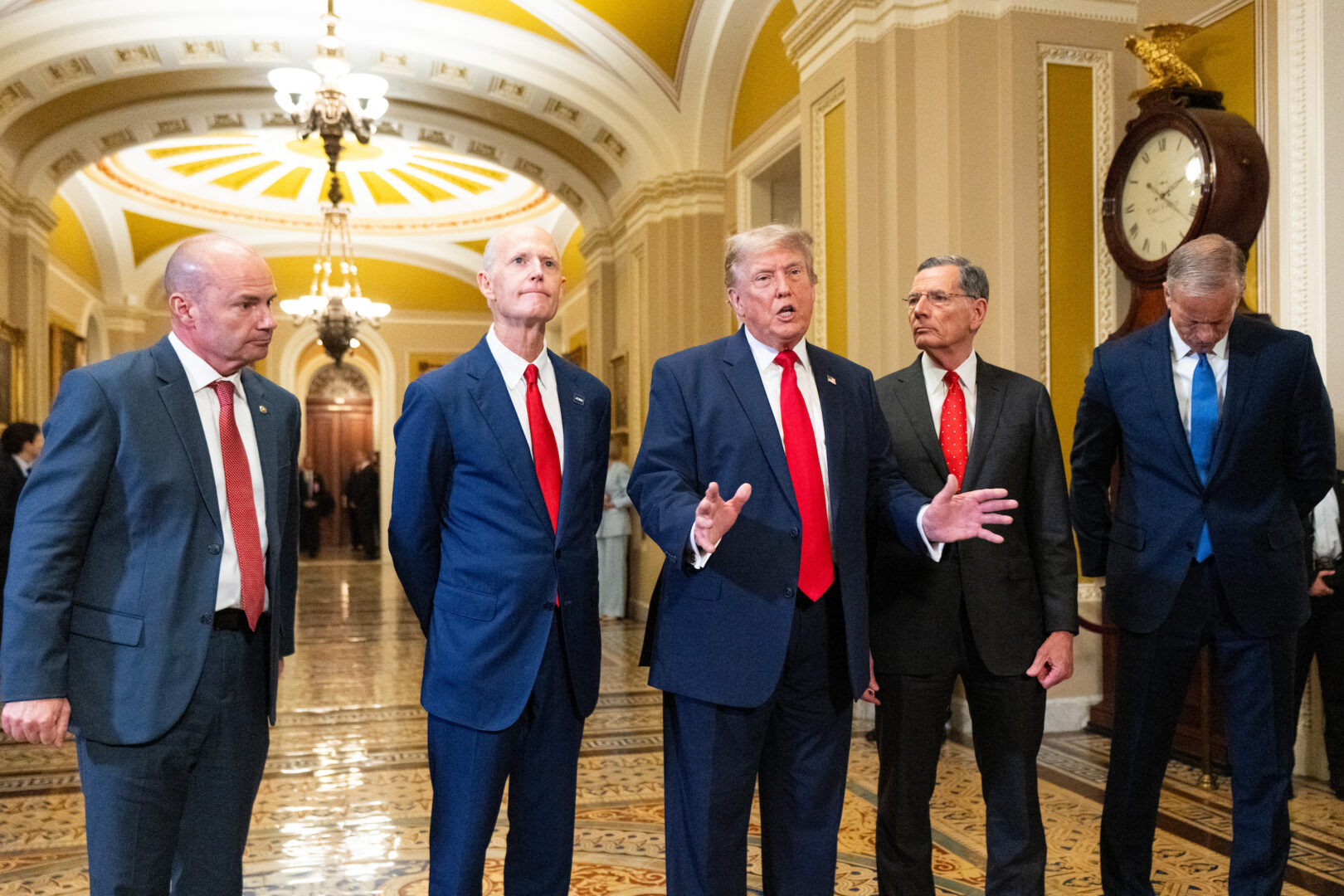
The Trump administration formally notified Congress that military activities against Iran resumed last week, renewing questions about the administration’s obligation to seek congressional approval for a war that began in February. The notification, which the 1973 War Powers Resolution requires be sent to congressional leaders within 48 hours of military action, suggests open-ended operations following July 7 strikes that the letter describes as “defensive" and "limited." It was dated July 10, the same day President Donald Trump declared on social media that the ceasefire between Iran and the United States was “OVER.” “United States Armed Forces remain postured to take further action, as necessary and appropriate, to address further threats and attacks upon the United States or its allies and partners and to ensure the Government of the Islamic Republic of Iran ceases being a threat to the United States and to our allies and partners,” Trump wrote in the letter. As legal authority for the renewed strikes, Trump cited his “responsibility to protect Americans and United States' interests both at home and abroad” and his “constitutional authority as commander in chief.” While U.S. and Iranian forces have traded fire on and off for months, the two sides had officially been in a ceasefire since early April that mostly paused the war that started in late February. After the ceasefire began, Trump sent Congress a notification that hostilities against Iran had “terminated,” with the administration contending that meant a 60-day clock to seek congressional approval for the war no longer applied. A memorandum of understanding signed by the Trump administration and Iran last month was supposed to shore up the ceasefire indefinitely as negotiations continued on an agreement to curb Iran’s nuclear program and lift U.S. sanctions. But last week, after Iran struck commercial vessels transiting the Strait of Hormuz, U.S. military forces launched a fresh wave of strikes against Iran. Trump escalated the renewed military action Monday, announcing on Truth Social that he was reimposing a U.S. naval blockade against Iran and that the United States would start charging a fee of 20 percent “on all cargo shipped” through the Strait of Hormuz. Under international law, a blockade is considered an act of war. The crumbling of the ceasefire comes after Congress approved a concurrent resolution by Rep. Gregory W. Meeks, D-N.Y., calling on Trump to end the war. The action was seen as largely symbolic since it was not sent to Trump for his signature and therefore is likely not legally binding. But supporters had hoped Trump would heed the message to end the war. A day after the adoption of the measure, though, the Senate on a procedural vote rejected a similar joint resolution that, had it been approved, would have been legally binding. The vote came after a Capitol Hill meeting between Trump and Senate Republicans where he fumed about the previous day’s war powers vote, though the two Republicans who flipped their votes argued they were giving space for the administration’s negotiations with Iran following the memorandum of understanding. Senate Democrats have previously said they would continue forcing votes on similar war powers resolutions every week the chamber is in session until the war ends, but have not yet specified their plans this week amid the resumption in fighting.