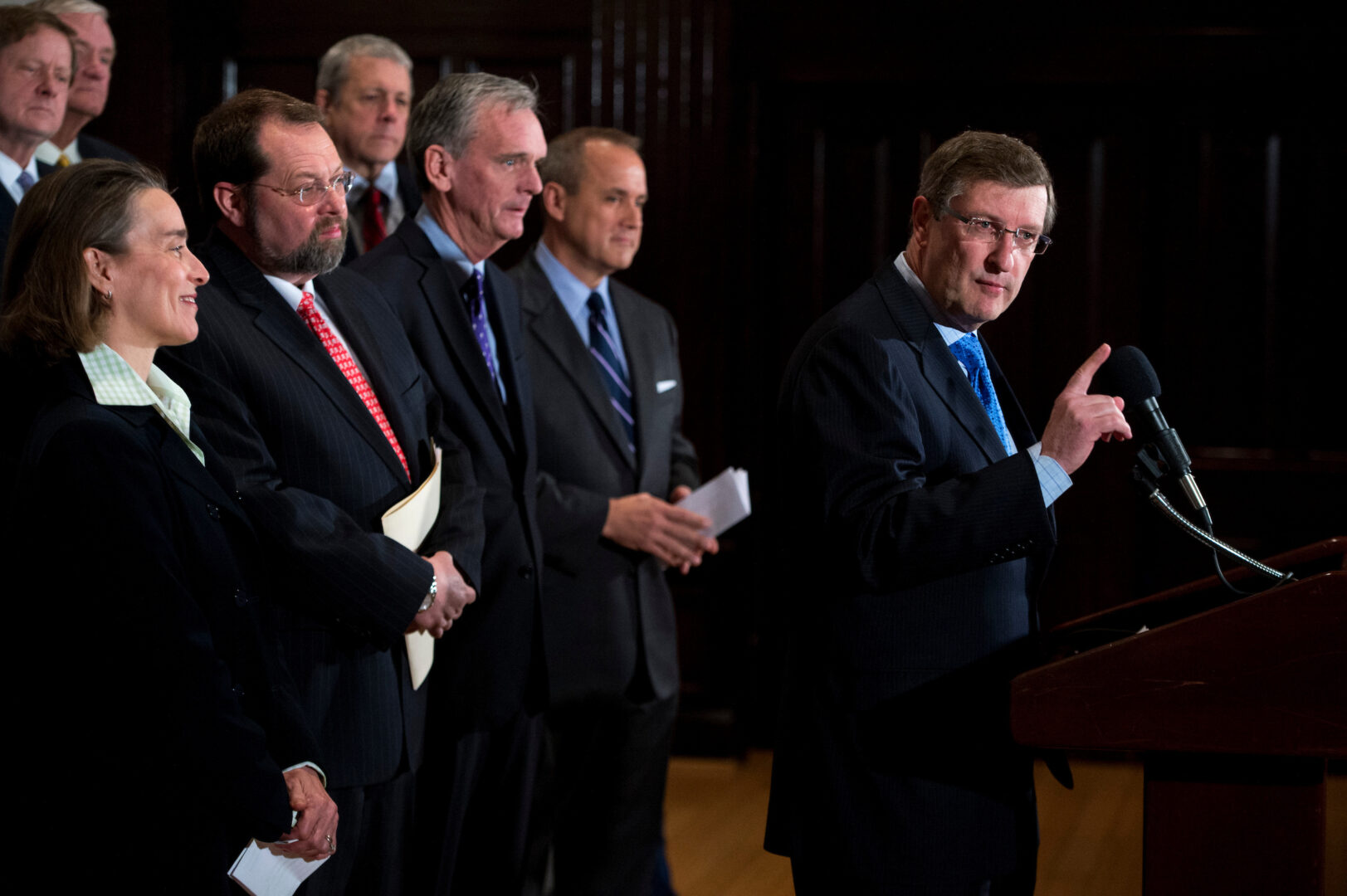
While Bay Area coders and Ivy League grads dominate the headlines about artificial intelligence (AI), it is miners and construction workers who will create and maintain the data centers and the energy grid that unlock American innovation. Our country’s AI infrastructure requires electricians to wire the facilities, welders to assemble the systems, plumbers to install the cooling infrastructure and thousands of skilled workers to connect those facilities to the power grid. As our economic strength and national security operations become more high-powered due to AI, America faces a fundamental challenge. We lack the workforce to meet the moment. Right now, America needs 500,000 electricians, 300,000 welders, and 550,000 plumbers. The private sector is beginning to recognize and address this challenge. One recent example, Meta’s America’s Workforce Academy, acknowledges the critical reality that the future of the industry depends as much on skilled workers as software engineers. This new, first-of-its-kind program is a five-week program to teach Americans a skilled trade. With no prior experience required, graduates of the course will earn a guaranteed job building data centers and the infrastructure that powers them. Without these skilled tradesmen, America’s AI infrastructure will stall, and China will win the AI race. If Beijing surpasses the United States in technology, it will gain significant economic and military advantages and wield greater influence over the digital world. The internet of tomorrow will reflect China’s model of censorship and state control, not the open values that have guided its development for decades. Our labor shortage is the product of decades of steering young Americans toward four-year degrees while undervaluing the skilled trades that keep our economy running. As a senator, I constantly heard about how our education system fails to prepare students for the jobs available today. Too often, there’s a disconnect between what students learn in the classroom and the skills the modern economy demands. For a generation, we have pushed students toward desk jobs behind screens, often ignoring the physical infrastructure that makes the digital world possible. The numbers testify to this truth: Eighty-four percent of hiring managers said that most high school graduates aren’t prepared for the workforce. Another 80 percent said that current graduates are less prepared than previous generations. As our education system fell further out of step with workforce demands, partisan gridlock prevented Congress from delivering lasting solutions. In that vacuum, private businesses are stepping up. Across the technology sector, companies are investing directly in workforce development programs designed to train the workers needed to build America’s AI infrastructure. In many cases, businesses are responding to these labor shortages faster than schools or policymakers. Meta’s America’s Workforce Academy program shows what a real built-in-America agenda can look like. We need more of these initiatives that connect Americans of all ages with the skills, credentials, and job opportunities needed to earn a living and meaningfully contribute to their communities. But workforce development alone is not enough. The federal government has an important role to play in this effort. American AI continues to struggle to navigate a patchwork of 50 different state regulations and unbearably slow permitting processes for energy infrastructure. While Chinese AI powers ahead with state-backed support, American projects are choked by red tape. To stay competitive, Congress should codify the nation’s AI Action Plan into law to establish a clear, streamlined national AI framework that prevents a 50-state patchwork of AI regulations. This strategy must also fast-track the construction of the very grid upgrades and data centers our new workforce is being trained to build. Winning the AI race will require more than breakthrough algorithms. It will require power plants, transmission lines, data centers and the skilled workers who build them. Kent Conrad represented North Dakota in the Senate from 1987 to 2013 as a Democrat. He serves as an adviser to the American Edge Project, which is supported by Meta and other domestic tech organizations.