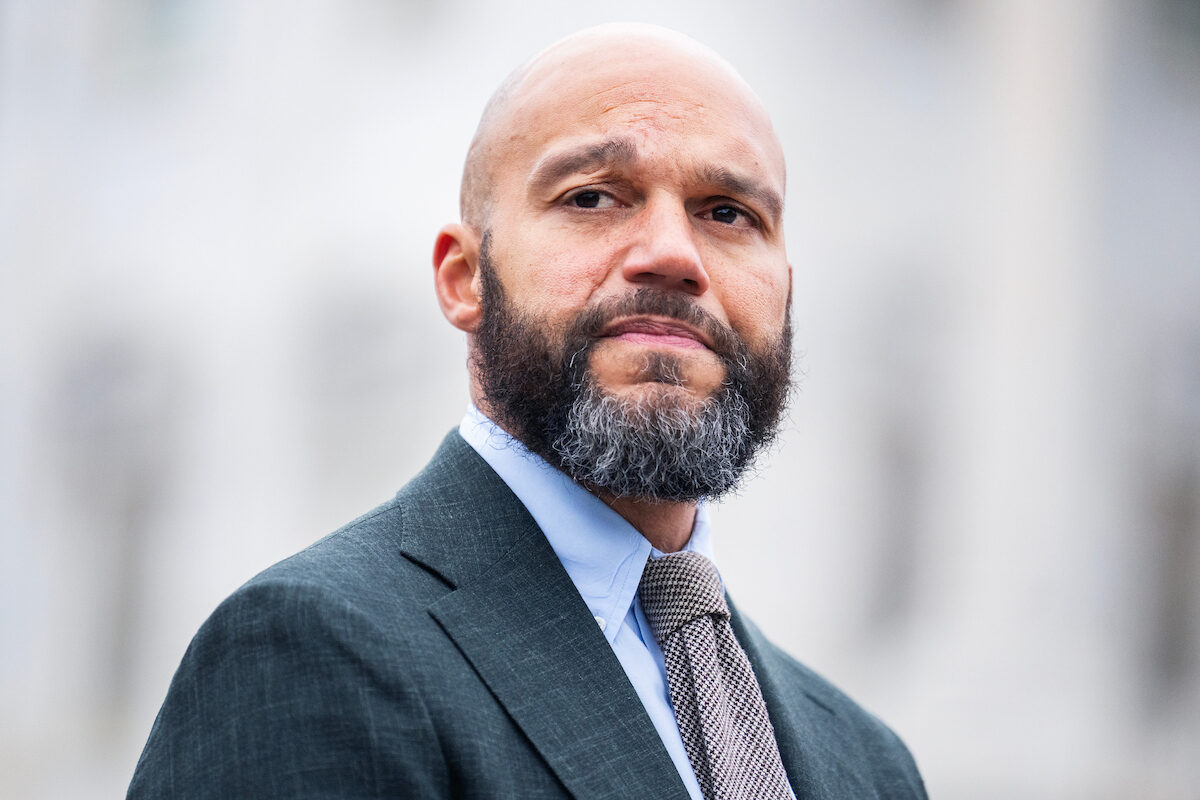
When John Leganski walked into Kevin McCarthy’s office as an intern in 2012, he’d barely heard of the man who would come to define his political career. But now, Leganski’s something of an expert — so much so that he could write a book about the former speaker. Which is exactly what he did. “Glory, Grief and the Gavel” details what it took to elect the California Republican as speaker after 15 rounds of voting and the fight that ultimately led to his ouster, which Leganski lived as his top floor staffer. Most congressional aides shy away from the spotlight, and it’s rare for them to publish books about their time on the Hill. The way Leganski sees it, there was a “void” to be filled. “We have lots of books about campaigns for president,” Leganski said in an interview. “We don’t really have many, if any, about what it takes to become speaker of the House.” In many ways, it’s a cautionary tale. “If we want a strong Article One, we should have a strong speakership. And so I hope people moving forward realize the gravity of that and are going to be reluctant to go down that path again,” he said of the procedural move that muscled out his boss. McCarthy was brought down by what’s known as a motion to vacate, which removes the speaker if the House adopts it, triggering a new election for the job. As he courted votes from his Republican colleagues in January 2023, a small but vocal group of holdouts gave him a list of demands, pressuring him to lower the threshold and allow a single member to kick-start that process, leaving him more vulnerable to his right flank. After days of negotiations, McCarthy was elected as the House’s 55th speaker — but nine months later, the same concession he made to secure the gavel led to his downfall. “This is the first time this has happened in a century. There’s nobody alive the last time this was around for us to talk to,” Leganski said, pointing to a similar but unsuccessful attempt on Speaker Joseph Cannon in 1910. Now a lobbyist at Harbinger Strategies, Leganski has remained close with McCarthy but said he waited to give his former boss a look until he had a “really solid” first draft. “I certainly was not going to put this out in the world if he did not bless it,” Leganski said. “I told him … ‘You’re either going to read this in one night and won’t put it down, or you’re not going to want to turn the page, and you’re going to have PTSD.’” No story is complete without a villain, and this is no exception. Former Rep. Matt Gaetz serves as the “chief antagonist” — unsurprising given McCarthy’s lingering resentment for the man who did the most to take him down. Leganski writes that “personal vendettas and grievances” motivated the so-called “Never Kevins,” calling the Florida Republican a “truly disturbing individual” with a “creepy voice.” He echoes McCarthy’s claim that Gaetz was out for vengeance over a House Ethics Committee probe into his alleged sexual conduct with a minor. Gaetz has denied wrongdoing. By contrast, firebrand Rep. Chip Roy — the “true center of gravity” of the Freedom Caucus at the time, according to Leganski — emerges as an unexpectedly reasonable negotiator. According to Leganski, the Texas Republican took the time to build relationships with floor staff as they circulated in the House chamber — something he thinks more members should do. As a former chief of staff to Sen. Ted Cruz, Roy knew “a cheat code for working on the Hill,” Leganski said. “The floor staff make a lot of things go, helping get bills on the floor, helping organize the calendar and how votes are going to run,” he said, describing them as “one of the best kept secrets” in understanding how Washington works. Hope for chaos? The book includes some moments of intrigue, like floor staffers finding and secretly making a copy of a private Freedom Caucus dossier, complete with a list of its closely guarded membership. But readers looking for juicy details about Mike Johnson, who ended up with the gavel in October 2023 after several other candidates got dumped, may want to look elsewhere. While Leganski charts the current speaker’s rise to power, he has no words of blame for the then-seventh-ranking member of House leadership — or even a review of his job performance. In Leganski’s eyes, Johnson wasn’t as random of a pick as the press made him out to be. “If you look at the cover of this book or rewatch the voting from January, you’ll see Kevin seated to my right and then the same member seated to my left each day without fail: Mike Johnson. You know when you have a feeling that someone is peeking over your shoulder? That was how I felt with Mike the entire week, catching him more than once trying to eavesdrop on my conversations with Kevin or sneak a glimpse at some of my incoming text messages,” Leganski writes. Leganski counts votes for speaker on the House floor on Jan. 3, 2023. In his new book, the ex-staffer writes about trying to keep an impassive face for the cameras as his boss faced multiple rounds of balloting. (Bill Clark/CQ Roll Call) If nothing else, the book is a tribute to staffers and how they make the Hill run. “I really did try to write this as, ‘I’m the narrator, it was me experiencing it,’” said Leganski, who relied on journal entries to jog his memory — a habit he recommends to other staffers. “Those big days, whether they’re good and celebratory, or they’re sad, and a down day, or you have a boss win a steering race, or leadership race — you want to remember that stuff,” he said of why he kept a journal. Would he ever run for Congress himself one day? “Absolutely not,” he said. The Hill has changed a bit since Leganski first started in 2012, back when interns weren’t paid and the margins in the House weren’t single-digit slim. But he does have some advice for current staffers looking to climb the ladder. “Hope for chaos,” he recalls former Vice President Dick Cheney once telling him, implying that turmoil can create an opening for young aides to rush in and advance their careers. His own advice is simpler — and also sunnier, which seems fitting for a loyal soldier in McCarthy’s “happy warrior” camp. “Do right by your boss, do the best job you can,” Leganski said. “You give them the best advice, the best counsel you can, and then they make the play call … and then you go out and execute it. That, I think, is a tried and true way to move up in government.”