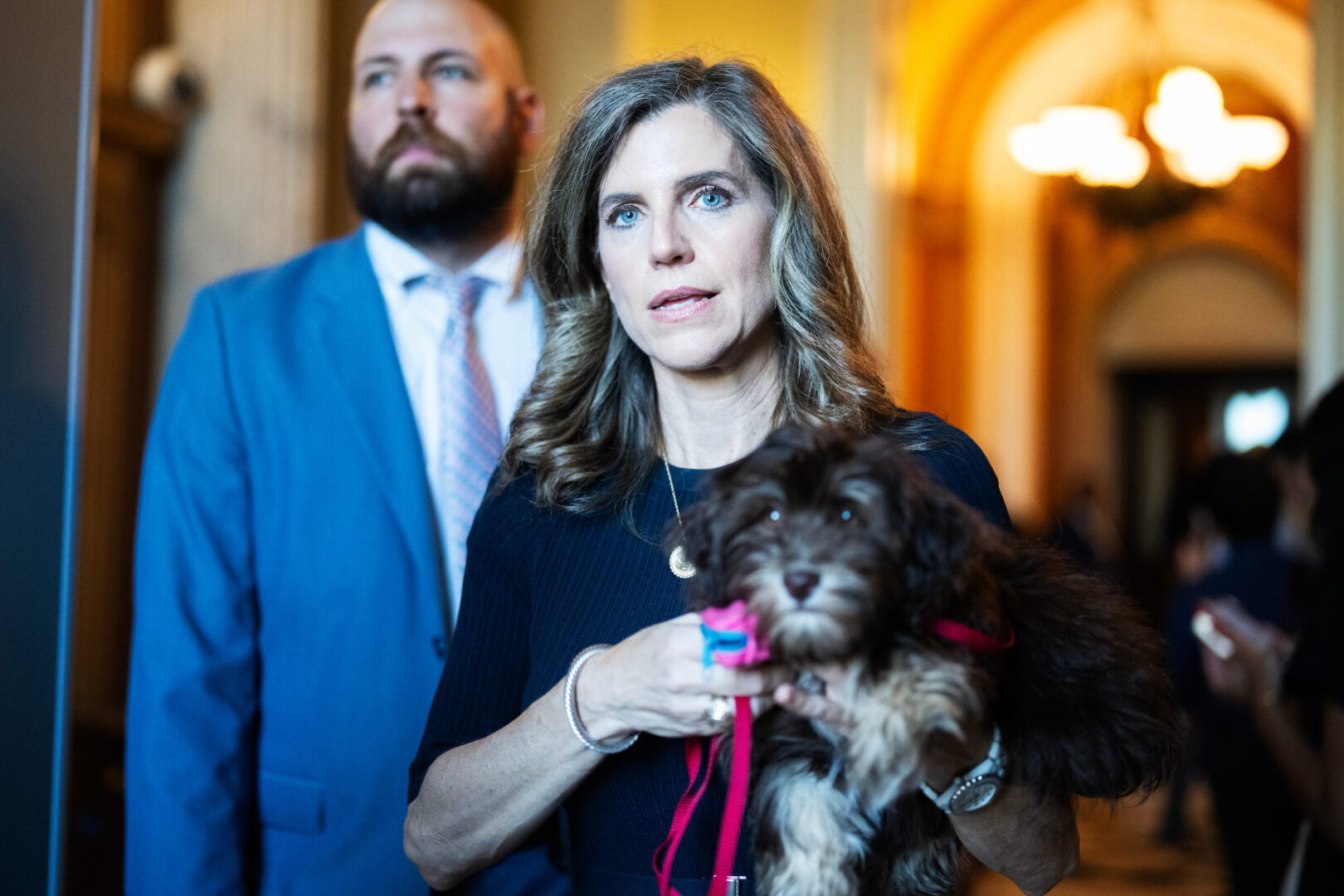
In his first two years on the job, Health and Human Services Secretary Robert F. Kennedy Jr. has become a polarizing figure on Capitol Hill, largely because of his vaccine skepticism and distrust of the status quo. But one of his quieter pushes — ending animal testing in medical research — has earned him accolades among some Democrats and Republicans alike. It could be considered an odd position for Kennedy, who admitted in 2024 to leaving a bear carcass in Central Park a decade earlier. But administration policies are consistently moving against such testing: Both the National Institutes of Health and Food and Drug Administration have recently rolled out policies to reduce the number of research projects that rely on animal testing. But it is consistent. In a 2025 interview with Lara Trump, Kennedy said his agency is "deeply committed to ending animal experimentation.” He also called for an end to the importation of monkeys for scientific studies. Lawmakers have introduced several bills to do the same. But at the same time, some researchers are trying to convince lawmakers that replicating research on nonanimal models is impossible. The debate has created some unlikely bedfellows. Sen. Cory Booker, D-N.J., a vegan and animal rights activist, is typically a fierce critic of the Trump administration and Kennedy’s HHS. But he applauds Kennedy’s animal-rights policy push. “I'm so happy that in some, in a narrow way, that the Trump administration is making progress on this,” Booker said Tuesday, calling ending animal testing “one of his favorite topics.” “It's just a win, win, win, win, win across the board,” Booker said of ending animal testing. Animal rights advocates walking around with beagles are a common sight on Capitol Hill these days, as groups like White Coat Waste and Cruelty Free International highlight animal rights legislation. These advocates have found an ally in Kennedy more so than his predecessors. “Many people in this administration, including Secretary Kennedy, came in with a distrust of a lot of the status quo,” said Kathy Guillermo, senior vice president of People for the Ethical Treatment of Animals. “And when these people came into their positions they started off looking very critically at what was going on and were ready to make change. In previous administrations we did not see that.” But some researchers say animals are essential to conducting certain medical research where nonhuman models just haven't caught up yet. Congressional views The debate is bleeding into this year’s House and Senate spending legislation. The House Appropriations fiscal 2027 Labor-HHS-Education bill, which currently awaits floor action, specifies that the National Institutes of Health should look into alternatives to animal testing, and requests that the NIH update in the fiscal 2028 congressional justification on actions it is taking to strengthen enforcement of alternatives to animal testing. Congress also asks the NIH to ensure peer reviewers have adequate resources to review nonanimal methods. But the report also recognizes the “essential role” of nonhuman primates in medical research and encourages the NIH to continue awarding funding to projects that use nonhuman primates and animal models. “These models remain indispensable in the discovery and evaluation of new therapeutics before they go to clinical trials,” the report states, noting increased importance for animal studies when it comes to age-related degenerative diseases, like Alzheimer’s and Parkinson’s. The committee also includes new bill language prohibiting funding for NIH-supported biomedical research on dogs and cats that could cause pain, even if anesthetics are used, unless there is no other alternative. The Senate’s fiscal 2027 bill is still being written. When asked about funding for animal testing in the measure, the Labor-HHS-Education Appropriations Subcommittee’s top Republican, Shelley Moore Capito of West Virginia, called animal testing a “big topic,” but said she was unsure how things would shake out. Timing is a big issue. The committee delayed this week’s planned markups, and now Capito said she is hoping that the committee is able to mark up the fiscal 2027 Labor-HHS-Education funding bill before the August recess. Sen. Tammy Baldwin of Wisconsin, the lead Democrat on the Labor-HHS-Education Subcommittee, said the Senate isn’t thinking about bill report language yet. “We're not quite there yet,” Baldwin said when asked about Senate report language regarding animal testing. Administrative actions On June 15, the NIH announced a new office dedicated to nonanimal science research. The Office of Research, Innovation, Validation and Application will focus on alternatives to animal testing and include things like 3D human tissue models and other animal-free testing methods that can reflect human biology. That announcement came after the NIH last year announced it would no longer award grants that solely rely on animal testing and the Food and Drug Administration released draft guidance on alternatives to animal testing earlier this year. But Booker is trying to get the agency to go further. Booker reintroduced legislation last year that would direct the FDA to implement previously passed law to reduce unnecessary animal testing and promote alternatives. The previously passed legislation, known as the FDA Modernization Act 2.0, was signed into law in 2022, ending the statutory mandate that investigational new drugs undergo mandatory animal testing before human clinical trials. But the FDA has delayed implementing the law. Booker’s bill, known as the FDA Modernization Act 3.0, was passed by the Senate at the end of last year and a version was reported out of the House Energy and Commerce Committee last month. That legislation is one of many bipartisan animal-rights-focused bills on Capitol Hill this Congress. Sens. Susan Collins, R-Maine, and Gary Peters, D-Mich., introduced legislation in March to get retired lab animals adopted. Rep. Nancy Mace, R-S.C., successfully attached two amendments to the House fiscal 2027 National Defense Authorization Act bill that would expand the Department of Defense’s limitations on using nonhuman primates in certain research and prevent animal research in collaboration with a foreign country of concern. Research concerns But groups that advocate for the use of animals in research say it is often impossible to replicate studies on nonanimal models, especially when dealing with the human brain or behavioral studies. Nonanimal models aren’t advanced enough yet to replicate human behavior in many instances, said Brandon Morton, vice president of government affairs for the National Association for Biomedical Research, and the Trump administration’s latest policies about transitioning away from animal testing doesn’t take that into account. “There should not be arbitrary deadlines or political pressure making scientific decisions,” Morton said of the Trump administration’s policies requiring the use of nonanimal models. Colin Saldanha, a neuroscience researcher at American University who consults with the American Psychological Association, agrees. His research uses zebra finch songbirds to study how hormones impact brain structure and how estrogen impacts neurodegeneration and repair. He said he has yet to come across a nonanimal model that replicates the zebra finch. “We cannot approximate the behavior of an organism with anything in a petri dish or on a computer,” Saldanha said. “That's the main reason why animal research is important for anything that has to do with behavior.”